Seminar:
Surface technologies
for green fuels
10 March 2026
| DieselHouse (Everllence) Energiporten 8 2450 København S |
Registration deadline 3 march 2026
The transition to green fuels such as hydrogen, ammonia, methanol, and biogas introduces new challenges for industrial components exposed to aggressive chemical and mechanical environments. Corrosion and wear are critical issues that threaten equipment reliability, increase maintenance costs, and slow the adoption of sustainable energy technologies.
This seminar explores the latest advancements in surface technologies and coating solutions designed to improve the durability and performance of components operating in green fuel systems. Participants will gain insights into cutting-edge research and industrial applications, while networking with leading experts from academia and industry.
The event also includes a guided tour of industrial test facilities, offering a unique opportunity to witness these technologies in action.
Organizers
This seminar is organized by Anette Alsted Rasmussen (Owner, Corrosion Advice ApS), Espen Hvidsten Dahl (Senior Consulent, Teknologisk Institut), Jesper Vejlø Carstensen (Head of Material Technology, Everllence) and Rune Juul Christiansen (Forsknings- og innovationschef, AH Metal Solutions A/S) from Teknologisk Videndeling’s Surface and corrosion steering group.
Programme
|
Registration and breakfast | |||
|
Welcome and introduction | |||

|
Surface Matters: Enabling Green Fuels in a Hard to Abate Marine World John Lindegård Kjær, Markedschef for PtX, Teknologisk Institut. 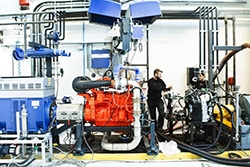 International shipping carries most of global trade and already accounts for around 3 % of global CO₂ emissions. With long‑lived vessels and energy‑intensive deep‑sea routes, maritime is one of the hardest sectors to decarbonize—and green fuels are essential to avoid locking in fossil technologies for decades. This keynote introduces why green fuels for marine, such as ammonia, methanol, hydrogen and e‑fuels, are central to the global climate agenda, and how they fundamentally change the operating conditions for components and systems. Higher temperatures and pressures, new combustion chemistries and more aggressive or “cleaner” media place new demands on materials and surfaces. The talk will provide a high‑level overview of the PtX value chain from power, electrolysis and fuel synthesis to storage and use on board, and highlight how surface technologies—coatings, corrosion protection and functional thin films—are key enablers for safe, reliable, and scalable green shipping. John Lindegård Kjær works with business development and innovation at the intersection of green fuels, Power to X and maritime solutions. He has extensive international management experience across various industries and a deep understanding of the practical challenges in scaling up new technologies from pilot to industrial deployment. Throughout his career, he has focused on bringing new solutions into real world use, working along the entire value chain – from developers and producers building green fuel production capacity to off takers in sectors such as shipping. As Market Director for Power to X and Biofuels, he bridges technology development, regulation and markets to enable Danish and international stakeholders to reduce CO₂ emissions through the adoption of green fuels, including in the challenging but crucial maritime sector. |
|||

|
Surface coatings for large two-stroke internal combustion engines operating on green fuels Jesper Vejlø Carstensen, Head of Material Technology, Everllence 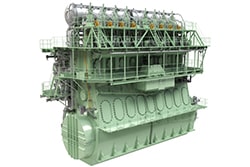 Green fuels are good for the global environment but they can challenge the different components used for internal combustion engines in the maritime industry. The pressures and temperatures in the combustion chamber are increasing, which calls for materials with reliable high temperature properties. The cleaner fuels result in less deposits on components which expose the surfaces to the harsh internal environment existing inside the engine. Various surface coatings have been developed to obtain reliable operation of the engines and some of these coating solutions need further development to maintain resilience during green fuel operation. This presentation will provide examples of thick and thin coatings used in present and future two-stroke marine engines. Jesper Vejlø Carstensen is Head of Material Technology at Everllence and has been working with coatings and surface technology for more than 20 years. This includes technologies like thermal spraying, laser cladding, welding and PVD/CVD. As Head of Material Technology he manages a group of 11 specialists, engineers and technicians working to develop the right material solutions for large two-stroke internal combustion engines. |
|||
|
Coffee and networking break | |||

|
Importance of Thin-Film Technologies in Solid Oxide Electrolysis Cell Technology for PtX applications Peter Blennow, Cell Expert, Topsoe A/S Solid oxide electrolysis cell (SOEC) technology is a cornerstone for efficient Power‑to‑X pathways, enabling the production of green fuels and chemicals such as ammonia and methanol. SOEC cells feature a complex architecture of thin films and layers: a dense electrolyte membrane for ionic conductivity, porous electrodes for electrochemical reactions, and barrier layers that prevent interdiffusion of elements during high‑temperature sintering and long‑term operation. At the stack level, metallic stainless‑steel interconnects are protected by coatings, chromium‑blocking and corrosion‑resistant films, that minimize degradation. This presentation will demonstrate how these engineered layers collectively minimize performance drift under harsh operating conditions. Peter Blennow is a Senior Specialist and Cell Expert in Power to X at Topsoe, with >20 years of experience working on solutions to improve performance and durability of ceramic SOEC cells. He collaborates across materials science and manufacturing to support industrial scaling, including activities related to Topsoe’s SOEC stacks. |
|||

|
Driving Green Fuel Production: Corrosion control of alkaline electrolysis system (Shared presentation) Rajan Ambat, Professor, DTU Construct This talk will examine the intersection of corrosion issues of accessory materials used for alkaline electrolysis process and efficiency of hydrogen production. The discussion will focus broadly on why corrosion control is important for green transition technologies’ sustainable performance, while providing specific examples of corrosion issues related to materials used in alkaline electrolysis systems and preventive measures. Dr. Rajan Ambat is currently Professor of Corrosion and Surface Engineering at Section of Materials and Surface Engineering, DTU Construct, Technical University of Denmark. He is also the Manager for the CELCORR/CreCon Industrial Consortium on climatic reliability of electronics and Center for Climate Robust Electronics (CRED) at DTU. He has more than 18 years of expertise in the area of environmental robustness of electronics and developing mitigation strategies. His current research interests broadly focus on Corrosion issue in relation to sustainable technologies namely humidity robustness issues of electronics, corrosion of materials in relation to carbon capture and storage, and corrosion of materials used for electrolysis systems. |
|||

|
Kapil Kumar Gupta, Tenure-Track Researcher, DTU Construct Dr. Kapil Kumar Gupta is a Tenure-Track Researcher at the Technical University of Denmark (DTU), Section of Materials and Surface Engineering. His research focuses on corrosion and surface degradation of alloys for various applications including Bio-absorbable implants, Carbon capture and storage, Electronics, and alkaline electrolysis. He contributes to several national and EU-funded projects on corrosion modelling, in-situ characterization, and mitigation strategies across diverse environments, including alkaline, CO₂, and humid microclimates. He is actively involved in international collaborations with academia and industry and has received recognition such as the ICC–CSCP Young Scientist Award for his contributions to corrosion science. |
|||
|
Lunch and networking break | |||

|
Empowering PVD for Corrosion Protection Dr. Holger Hoche, TU Darmstadt – Centre for Engineering Material Today, PVD technology is largely considered irrelevant for protecting metals under corrosive loads, where electroplating (e.g., hard chrome) remains the state of the art. This presentation introduces single-layer PVD-TiMgGdN and TiAlMgGdN coatings that protect mild steel for over 1,000 hours in the aggressive salt spray test with only a 5 µm thickness. Their superior stability in acidic (pH 5) and alkaline (pH 8.5) environments—attributed to the synergistic effects of Mg and Gd—offers significant potential for green fuel applications, particularly for components exposed to aggressive media like ammonia. The talk will evaluate how microstructural design and alloying with Mg and Gd enable this game-changing performance. Dr. Holger Hoche leads the Material Analytics department at the Center for Engineering Materials (MPA-IfW), TU Darmstadt. Since 2012, his research has focused on PVD coating development, hydrogen-induced stress corrosion cracking, and failure analysis of metallic components. |
|||
|
Challenges with decompression, diffusion and permeability in hydrogen atmospheres Asger Gade Andersen, FORCE Technology FORCE Technology will share insights and practical experiences on challenges for components in hydrogen atmospheres. These experiences are based on building, commissioning, and running hydrogen test facilities, which mimics the challenges faced in industry. Focus will be on test of hydrogen permeability through coatings and metallic samples. Additional issues with related to leakage such as decompression damages in gaskets will be discussed. |
|||
|
Coffee and networking break | |||
|
Guided Tour at Everllence Facilities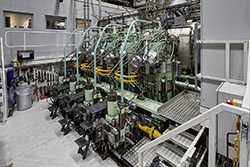 The day concludes with a guided tour at Everllence test facilities, offering a unique opportunity to witness these technologies in action. |
Registration fee
| DKK 2,995 | Members of Teknologisk Videndeling and promoting partners listed in the registration form |
| DKK 3,595 | Non-members |
| DKK 1,125 | PhD Students |
| DKK 200 | BSc and MSc students (This price requires membership of Teknologisk Videndeling. The membership is free of charge – register here.) |
All prices are excluded of Danish VAT 25 %.
The fee includes talks, breakfast, lunch and coffee breaks and access to speakers’ presentations.
Early bird discount of DKK 300,- when registering before 10 February 2026. Early-bird discount does not apply to BSc, MSc and PhD students.
Registration
Binding registration
Registration is binding, however, substitutions are accepted at any time.
In case of questions please contact us at teknologiskvidendeling@construct.dtu.dk or at +45 2724 2782/ +45 9351 1276
Promoting partners