

Seminar:
Degradation of Plastics
10 November 2026
| VIA University College Banegårdsgade 2 Auditorium 1 8700 Horsens |
Registration deadline: 30 October 2026
For most technical applications of plastic materials, it is extremely important that the performance of polymer used is not degrading too fast. When new products are being made with – even small amounts of – recycled plastics, this discussion becomes more complex both in terms of product safety and product performance – particularly lifetime. Can we measure the degradation? How much of a recycled polymer is safe to add to your raw material? What can we do to minimize the degradation?
The seminar provides state-of-the art knowledge on degradation of polymers covering both degradation mechanisms and methods to quantify the degradation. Several industrial case stories will focus on degradation of recycled polymers and highlight the opportunities and limitations observed when using recycled materials in actual products.
Target audience
Companies working with technical polymers in general and particularly companies having products with tight specifications or companies planning to include recycled polymers in their products.
Organizers
This seminar is organized by Torben Tang (IPU) from our Surface and Corrosion Steering Group and Emil Andersen (LEGO A/S) from our Polymer Steering Group.
Program
|
Registration and breakfast | |||
|
Welcome and introduction Torben Tang & Emil Andersen |
|||

|
Hyperspectral imaging - plastics and the missing light Mogens Hinge, Professor, Aalborg University 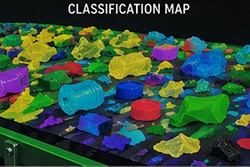 Plastic recycling is an increasing challenge, and it can be argued that plastic identification is one of the main obstacles for generating pure recycled plastic fractions. Our research group have worked on solving this challenge by employing inline hyperspectral imaging as the main analytical technique. The presentation will include what is hyperspectral imaging? What can we see? How do we address spectral analysis? All in all a trip down the lane of hyperspectral imaging of plastics. Mogens Hinge is a newly appointed professor at Aalborg University, and he has a background as colloidal, surface and polymer chemist. He has worked with plastic formulation, polymer synthesis, and analysis, and has over the past century focused on plastic recycling. This research has resulted in several publications on plastics and polymers and in industrial implementation of inline surveillance of plastic waste. |
|||

|
Warming up to Circular Materials (Shared presentation) Gitte Tang Kristensen, Senior Manager for Circularity & Product Compliance, Danfoss A/S 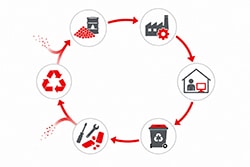 Circular plastics are gaining momentum — but how do we make them work for technical applications? Along the way, we unpack the many barriers encountered across the value chain, organization, and business case — and the valuable insights gained from tackling them in practice. Gitte Tang Kristensen is Senior Manager for Circularity & Product Compliance at Danfoss Climate Solutions. She works with integrating circular economy principles into product design, materials, and regulatory compliance, with a focus on enabling practical and scalable circular solutions across complex value chains. |
|||

|
Warming up to Circular Materials (Shared presentation) Lars Nickelsen, M.SC. Virtual Processing, Danfoss A/S Lars Nickelsen (M.Sc., mechanical engineering) is a Material Specialist focusing on polymers at Danfoss. Lars has 30 years of experience working with material selection and long-term performance of polymers specializing in metal replacement in hot water applications. |
|||
|
Lunch | |||

|
Examples of polymer degradation due to intensive cleaning Kristoffer Hansen, Specialist Engineer, M.Sc., Ph.D., IPU 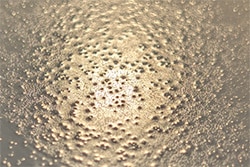 Disinfection agents are by nature aggressive, and conventional thinking is, the more aggressive the better. In some cases, the impact on the surface from cleaning/disinfection agents make future cleaning harder. Illustrated by real life examples and literature background. Kristoffer Hansen, Ph.D. (Materials Science), has worked in MedTec for 25 years within polymers, adhesives and coatings. Currently on projects related to materials integrity, surface degradation, hygienic surfaces and impact from sanitization processes |
|||

|
Balancing Durability, Circularity, and Trust Francesca Teocoli, Senior Technology Specialist, VELUX A/S  Some recycled materials, such as rPVC containing legacy lead (Pb), offer excellent durability and strong circularity potential, but also raise important social and regulatory considerations. This challenge drives innovation at VELUX, moving beyond technical performance alone toward a more holistic material selection framework. Through a three-lens approach, durability, circularity, and acceptability, VELUX assesses alternative materials without legacy additives and future-proof circular options. Francesca Teocoli, Ph.D. in Materials Science, is a Senior Technology Specialist at VELUX A/S with more than 15 years of experience in applied materials research and technology innovation. Her work focuses on materials exploration and testing, particularly in relation to the durability, performance, and long-term behavior of polymer-based solutions, alongside enabling digital approaches for product and process development. She collaborates closely with stakeholders to translate fundamental understanding of material degradation and performance into scalable, sustainable solutions that support product longevity, recyclability, and reduced environmental impact. |
|||
|
Coffee and networking break | |||

|
Degradation Characterization and Recycling Potential of Glass Fiber Reinforced Polyamide 66 for Pump Housings Michael Lei, Senior Specialist, Polymers, Grundfos  This presentation examines the degradation of glass fiber reinforced Polyamide 66 in pump applications, with focus on durability and recycling potential. Artificial aging and material characterization were used to evaluate changes in mechanical and molecular properties during service life. Blending experiments with degraded and virgin material further assessed the potential for reuse in new applications. The results highlight both the opportunities and limitations for recycling engineering polymers in demanding environments and provide insight into the possible circularity of high-performance polymers. Michael Lei, M.Sc.Eng. in Chemistry, is a Senior Specialist in Polymers at Grundfos with more than 20 years of experience across roles and companies in the plastics industry. His work focuses on polymer selection and technical performance requirements, while also contributing to the exploration of future materials and product development opportunities. |
|||

|
Creating a Circular Loop in Healthcare - Recycling Used Prefilled Pens into New Devices Jacob Moberg Sandager, Senior Circular Plastic Engineer, Novo Nordisk A/S 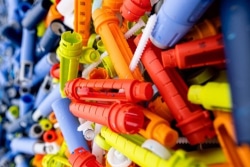 Novo Nordisk produces hundreds of millions of prefilled injection devices each year. Where most devices will end up in landfills due to their use multiple of materials and medical classification. |
|||
|
Closing remark |
Registration fee
| DKK 2,845 | Members of Teknologisk Videndeling and promoting partners listed in the registration form |
| DKK 3,395 | Non-members |
| DKK 1,125 | PhD Students |
| DKK 200 | BSc and MSc students (To register as student you need to have a membership, which is free of charge for students – register here.) |
All prices are excluded of Danish VAT 25 %. The fee includes talks, breakfast, lunch and coffee break and access to speakers’ presentations.
Early bird discount of DKK 500 when restringing before 19 September 2026.
Early-bird discount does not apply to BSc, MSc and PhD students.
Registration
Binding registration
Registration is binding, however substitutions are accepted at any time.
Questions
Please do not hesitate to contact Teknologisk Videndeling by e-mailing teknologiskvidendeling@construct.dtu.dk
Promoting partners


