

Seminar:
Flexible Packaging
– from demands to solutions
8 October 2026
| Venue: Teknologisk Institut Kongsvang Allé 29 8000 Aarhus C Room AR 1.5.12 (Conference hall) |
Registration deadline 1 October 2026
About the seminar
Plastic packaging is currently receiving significant attention. New requirements, changing market conditions, and increasing expectations regarding recyclability and documentation are increasingly influencing the work carried out by companies responsible for the development, procurement, specification, and use of packaging.
With Packaging Day 2026, we focus on the themes shaping the plastic packaging sector right now.
- What do new requirements and extended producer responsibility mean in practice?
- Which considerations are important in the development and selection of plastic packaging?
- Where do the most significant trade-offs arise between functionality, material choice, and recyclability?
- What challenges are particularly evident in flexible packaging?
- How do companies practically adapt their packaging solutions to new conditions?
Who should attend:
Professionals with responsibility for or interest in the packaging field, including:
- Packaging development and packaging engineering
- Quality and product safety
- Procurement and specifications
- Production and processes
- Sustainability, compliance, and documentation
- Materials, converting, and packaging manufacturing
The day is relevant for packaging producers, material suppliers, food companies, and other stakeholders working with plastic packaging as part of their business or professional field.
Participants can expect:
- Updated insights into current development trends
- Professional presentations on key topics within plastic packaging
- Concrete perspectives on challenges and solutions in practice
- Opportunities to hear different viewpoints and experiences from the industry
Organizers
This seminar is organized by Carsten Lund from Epsilonplus and Alexander Bardenstein from Teknologisk Institut – members of Teknologisk Videndeling’s plastic technology steering group.
Program
|
Registration and breakfast | |||
|
Welcome and introduction | |||

|
PPWR and implications on requirements, threats and potential solutions for flexible packaging (ONLINE Presentation) Peter Désilets, General Manager, Pacoon The PPWR will greatly impact the recyclability of materials and the use of recycled content, with the aim of improving the circular economy, reducing the use of fossil raw materials, and keeping materials in circulation. Regarding flexible packaging, the main packaging materials used today are polymer-based, but we are seeing more fibre-based solutions with better barriers coming onto the market. This shift is driven not only by ecological concerns by consumers and image aspects, but also by the impact of multi-level cost savings and profitability. The PPWR Packaging and Packaging Waste Regulation is the most important EU legislation for packaging. For more than 2,5 years, PACOON supports companies with web tools and expertise in screening and clustering their portfolio and preparing them for the declaration of conformity. Furthermore, with their PPWR Check web tool they identify automatically requirements from 2030 onwards and develop solutions for B2B and B2C. |
|||

|
Why Flexible Packaging Circularity Needs Value Chain Partnerships Per Sigaard Christensen, Business Manager, Teknologisk Institut 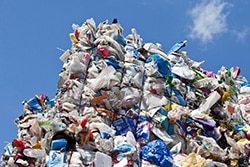 Much of the current debate on the Packaging and Packaging Waste Regulation (PPWR) and Extended Producer Responsibility focuses on compliance at the individual company level. This presentation shifts the perspective to the value chain as a whole. Drawing on experience from the InFact project – a cross-industry initiative unlocking circularity for flexible plastic packaging – the talk explores how partnerships across the value chain create solution spaces that no single company can reach alone. With Europe facing a significant shortfall in recycling capacity for flexible packaging ahead of the 2030 recycled-content requirements – and recent findings questioning the cost-effectiveness of chemical recycling – the presentation asks what it will really take, legislatively, financially, and industrially, to close the gap. Per Sigaard Christensen, business development manager at the Danish Technological Institute, holds +10 years of experience in the plastics and plastic recycling industry. He is the founder of several projects on plastic circularity including the InFact project (16 partners unlocking circularity for flexible plastic packaging) and the CRISP project (2025–2028), which focuses on recycling household rigid plastic packaging into new food-grade plastic packaging. |
|||
|
Coffee and networking break | |||

|
The Impact of the PPWR on Extended Producer Responsibility in Denmark Marianne Roed Jakobsen, CEO, VANA A/S 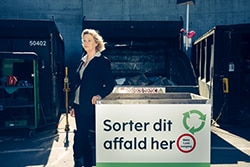 EU’s new Packaging and Packaging Waste Regulation (PPWR) is reshaping the framework for packaging and Extended Producer Responsibility (EPR) in Denmark. This presentation provides an overview of the key changes and examines their implications for producers, importers, and other stakeholders across the value chain. Particular attention is given to the interaction between the PPWR and the Danish EPR scheme, including new requirements, roles, and expectations in the years ahead. Marianne Roed Jakobsen is CEO of VANA, Denmark’s leading collective producer responsibility organisation for packaging. She has extensive leadership experience and has played a key role in establishing and developing VANA since its foundation in 2021. Her work focuses on producer responsibility, the green transition, circular economy and creating effective frameworks for businesses. |
|||

|
To be announced Per Holst-Hansen, Owner & Specialist in food contact materials, FCM Testing To be announced |
|||
|
Lunch and networking break | |||

|
Flexible Packaging Challenges and Choices Grane Maaløe, Sustainable Packaging lead specialist, Arla Foods  A hands-on review of the challenges Arla faces in adapting its flexible packaging to comply with the PPWR. The session will explore the strategic choices that must be made when the view ahead is obscured by a lack of viable solutions for product protection and genuine recyclability. Grane Maaløe is a Packaging Specialist in Arla’s Innovation Department. He has extensive experience in food packaging and design for recycling. Over the course of his career, his focus has evolved from packaging development to working with waste as a resource in the transition to a circular economy. |
|||

|
Making Packaging Decisions in a Complex Regulatory Landscape: HiPP’s PPWR Perspective Mette Olsen, Packaging Developer, HiPP Baby Food Packaging development increasingly takes place in a changing regulatory landscape, where requirements and guidance on recyclability may differ across authorities, industry initiatives and assessment methodologies. This presentation explores how companies can make robust packaging decisions while navigating frameworks such as Germany’s Central Packaging Register Agency (ZSVR), CEFLEX and RecyClass. It addresses the balance between regulatory compliance, recyclability and the functional requirements of packaging. Using HiPP as an example, the presentation also illustrates how the company’s different roles under the Packaging and Packaging Waste Regulation (PPWR) – including producer, manufacturer and co-packer – create responsibilities from several regulatory angles. This makes a coordinated assessment of the entire packaging portfolio essential. The session offers practical perspectives on developing a future-oriented strategy that supports both compliance and efficient adaptation across product categories. Mette Olsen is Packaging Developer at HiPP Baby Food. She has worked for food producing companies in southern Germany for more than 20 years, specializing in packaging development. Her extensive experience enables her to select optimal packaging solutions while considering all relevant technical, safety, and regulatory requirements. Working for a baby food manufacturer means that food safety, product quality, and compliance with legislation—such as PPWR—are essential components of her daily responsibilities. |
|||

|
Navigating EPR and PPWR: Choices, Challenges, and Opportunities for Polyprint and the Food Packaging Value Chain Malene Villadsen, Environm./Sustainability Manager, Polyprint 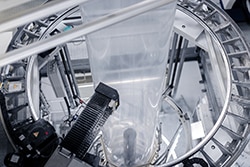 What do EPR and PPWR mean to Polyprint A/S and our value chain? How can we help and which choices need to be taken. As a supplier to the food industry, it’s important to be proactive, and innovative with new solutions, this means working closely with both customers and suppliers. Is it possible to find solutions for all the different food contact materials, and what are the costs of doing so. It’s very important that the customers know that it will take a lot of commitment and time when changes in production or new machinery are needed. Malene Villadsen is Environmental and Sustainability Manager at Polyprint and holds a degree in Chemical Engineering as well as laboratory technician qualifications. She has more than 20 years of experience in the flexible food packaging industry, working with food contact material legislation, laboratory testing, sustainability management, ISO 14001 certification, monomaterial packaging development, ESG reporting, carbon accounting, PPWR, and Extended Producer Responsibility (EPR). |
|||
|
Coffee and networking break | |||

|
Flexible PET Packaging — To Be or Not to Be? Circularity, PPWR and the path towards recyclable flexible films Alexander Leo Bardenstein, Business Manager, Teknologisk Institut 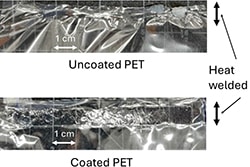 Flexible PET packaging can be circular, but PET alone does not make a package recyclable. This presentation explains how PPWR shifts the focus towards packaging that can be collected, sorted and recycled in real systems. Participants will take away practical principles for designing flexible PET films: simplify the structure, minimize incompatible components, and link every design to a defined recycling route. A thin sol–gel-coated, heat-sealable PET film is presented as an example of how replacing conventional sealing layers can simplify a structure while improving barrier performance. Alexander Leo Bardenstein is Business Manager for Packaging Materials and Pilot Production at the Danish Technological Institute (Teknologisk Institut). His work focuses on developing functional and circular packaging materials, with particular emphasis on flexible packaging, PET-based films, barrier technologies, recyclability-by-design and the transition to PPWR-ready packaging solutions. His expertise spans cellulose-based barrier packaging, active and microwaveable food packaging, equilibrium modified-atmosphere packaging (eMAP), plasma processing, and ultrasonic and radiation technologies for food packaging and safety. |
|||
|
Panel discussion | |||
|
Closing remark |
Seminar fee
| DKK 2,995 | Members of Teknologisk Videndeling and promoting partners listed below and in the registration form |
| DKK 3,595 | Non-members |
| DKK 200 | BSc and MSc students (To register as student you need to have a membership, which is free of charge for students – register here.) |
| DKK 1,125 | PhD Students |
All prices are excluded of Danish VAT 25%.
The fee includes talks, breakfast, lunch, coffee breaks, refreshments after the seminar and access to speakers’ presentations.
Early bird discount of DKK 300 by registering before 16 September 2026. Early-bird discount does not apply to BSc, MSc and PhD students.
Invoice will be forwarded 14 days before the event. It is possible to pay by credit card.
Cancellation of event
Should we have to cancel the event you will be notified approximately 14 days before the scheduled activity.
Registration
Binding registration
Registration is binding, however substitutions are accepted at any time. Please just contact us at teknologiskvidendeling@construct.dtu.dk.
Questions
Please do not hesitate to contact Teknologisk Videndeling by e-mailing teknologiskvidendeling@construct.dtu.dk
Promoting partners


